Wednesday, April 20, 2011

38 Indian cities fall in moderate to high risk seismic zones

Top metros like Delhi, Mumbai, Chennai and Kolkata fall under moderate to high risk seismic zones of the country, the National Disaster Management Authority has said.
“Earthquake is a major issue of concern. Over 58.6 per cent of land in India is highly vulnerable to earthquakes and 38 cities fall under moderate to high risk seismic zones,” NDMA Vice Chairman Shashidhar Reddy told PTI.
Delhi, Chennai, Pune, Greater Mumbai, Kochi, Kolkata, Thiruvananthapuram, Patna, Ahmedabad, Dehradun are some of the cities falling in the vulnerability zone.
Noting that a large number of buildings constructed in the past have not been made earthquake resistant, he said, “NDMA is ensuring that the new constructions that come up are disaster resistant and the old buildings are retrofitted.”
The NDMA is training a large number of architects, engineers and masons to make sure that any new construction that comes up is earthquake resistant.
“To have a topography study, a team of experts from six IITs led by IIT-Mumbai is working together to classify buildings in 10 different types, to make all buildings earthquake resistant,” he said.
A senior NDMA official said that 235 districts fall in the seismic zones IV and V.
“We need to take into consideration structural safety, mitigation and preparedness and immediate response. Lifeline buildings and telephone booths need to be retrofitted and critical installations in zone IV areas should not be allowed,” the official said.
He said in spite of Japan being highly equipped and fully prepared, when disaster struck, the country was devastated.
“It reminds us of our vulnerability. Disaster management is not a one-day job. We have already done mistakes in not closely monitoring our constructions in the past.”
Since making all buildings earthquake resistant is a state subject, NDMA has already written to almost all the states to ensure safe construction as per disaster management guidelines.
However, a senior official rued “No substantial response has been received so far.”

Collected From,
THE HINDU,New Delhi, April 10, 2011

Tuesday, April 19, 2011

Report on Divisional level sharing workshop- Zilla Parishad, Chittagong

On April 12, 2011 Young Power in Social Action (YPSA), one of the partner NGOs of Concern Universal organized a Divisional level sharing workshop in Chittagong Zilla Parishad, Chittagong.  It was a part of the activities of Capacity strengthening on Community Managed Disaster Risk Reduction and Climate Change Adaptation project of Concern Universal.
           A total 105 participants attended in this workshop.  Additional Divisional Commissioner of Chittagong Division was the chief guest, Deputy Director of Fire Service & Civil Defiance of Chittagong and Director of Local Government in Chittagong Division was the Special guest and Director of Chittagong Medical College and Hospital was the president in this workshop. Others participants were ED of different NGOs, representatives of NGOs, CUB representatives, representatives from Scouts, Red-Crescent, representatives from Educational & Medical Institution, representatives from Chittagong City Corporation, CDA, WASA, District level officials in Chittagong Division, Ms, Khaleda Begum, Team Leader of YPSA was moderator in this program.
At the beginning of the workshop, moderator Ms, Khaleda Begum presented welcome speech on behalf of Young Power in Social Action (YPSA). Ms. Kanika Chakraborty delivered welcome message on behalf of Concern UniversalBangladesh. Mr. Masud Rana, Assistant Project Manager of CUB presented a documentary on different types of hazard of Chittagong division. After that, he discussed total project activities by showing slides in power point. Climate is changing day by day, so we ought to adopt to the situation. This is the platform to share personal opinion how to adopt with the change and what should we do to reduce the disaster risk- his requested was to the audience.

After this session participants contributed to open discussion. The followings are participants' opinion in open discussion:
  • At first one has to know about the hazards and disaster, and consequently have the responsibility to inform it to others.
  • We are not following the rule of building code, we ought to follow it.
  • We should change our medical system with climate change.
  • We should work together for reducing disaster risk.
  • We need to build strong community or the strength of community
  • It is very important to inform every body for awareness building.
  • We can reduce the risk if we all try together. 
        Mr. Mostafizur Rahman, Director of Chittagong Medical College and Hospital & president of this workshop, articulated that from this workshop we learnt a lot, and now we need to replicate it to our organization and our community. We need to create cultivatable land and plantation areas. We should maintain building code. Finally he thanked all for active participation before concluding the workshop.

Reported by,
Masud Rana
CU-Bangladesh

Report of the Training at Chittagong-7-11 April, 2011

Concern Universal–Bangladesh
Report of the Training on Climate Change, Mainstreaming DRR and Popular theatre:
Concern Universal–Bangladesh successfully organized a 5-day long residential training session on climate change, Mainstreaming Disaster Risk Reduction (DRR) and Popular Theatre for its 17 partner NGOs. This training was the part of the CUB’s capacity building project and was funded by CORD AID.
This training was held between 07th to 11th  April, 2011 at YPSA training centre, in Chittagong. 28 participants form 17 partner organizations joined in this training course. The course was jointly facilitated by the Concern Universal – Bangladesh and its technical allies, PASS (Participatory Advancement Social Service).

Reported by,
Masud Rana

Sunday, April 10, 2011

No steroid cream on face without prescriptions, says dermatologists

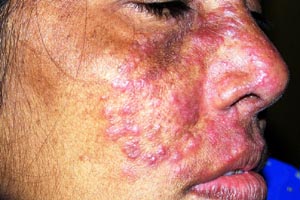
       Since last twenty-five-years Sucharita Sanyal had been using a common skin cream for her pimples but they turned bigger, spread all over her face and started bleeding. By the time she realized and stopped using the ointment it aggravated the rashes even further. Her condition dramatically, though temporarily, would improve if she had applied that cream again. But it would turn horrible the moment she had stopped using the cream. Her condition was eventually diagnosed as Topical Steroid Damaged Face (TSDF) which is triggered by continuous use of strong topical steroids on face. Indiscriminate uses of such creams have resulted in a large no of  people in Kolkata and surrounding areas suffering from this ailment, which is not fatal but can’t be cured easily.
A study conducted by the Indian Association of Dermatologists, Venerologists and Leprologists (IADVL), a 6500 member strong organization, in 12 Indian cities reveal some disturbing facts. The survey was conducted in various centers in Kolkata, Chennai, Bangalore, Lucknow, Baroda, Pune, Udaipur, Dibrugarh, Aligarh and Coimbatore. The study has been published in Indian Journal of Dermatology, Venereology and Leprology (March-April 2011, Vol 77 Issue 2, pp 160-166) . It showed that most patients had used steroid-laden ointments like Betnovate C and N, Tenovate, Lobate, Melacare or Quadriderm which are available without any prescription. "In most of the cases these medicines are wrongly used to treat dark patches on face or to cure pimples. These medicines have a high steroid content that may turn the skin thinner, give rise to steroid dependence, pimples or rashes for which people might have been using them actually aggravate. Other serious complications like hirsutism (unwanted hair growth on face in females), perioral dermatitis, rosacea etc can also develop.  The side-effects could even be systemic. Unfortunately, these creams and ointments are available over the counters without any prescription by any specialists in India, which is not the case anywhere else in the world," said Koushik Lahiri, consultant dermatologist and
a senior member of the IADVL.
Dr. Arijit Coondoo and Dr. Saumya Panda,  senior dermatologists of Kolkata were also associated with Dr. Koushik Lahiri in this study.The association plans to approach the union health ministry and the department of pharmacy to try and impose restrictions on the sale of creams and ointments that contain potent steroids. Experts, however, argued that they had nothing against steroids that were essential for treating several
skin ailments. A proper dose prescribed by dermatologists is beneficial. "But few choose to seek advise before applying these ointments which are meant for diseases like eczema and psoriasis and need to be used in a controlled way. These tubes are sold in millions and since they come under the umbrella of DPCO (Drug Price control order) they are available at a throwaway price. So, the misuse becomes even more rampant," explained Lahiri.
Since drug rules prohibit over-the-counter sale of potent topical steroids internationally, this entity is virtually unknown in developed countries and naturally there is no prescribed treatment for this problem. "We have been groping in the dark and have been forced to devise our own treatment regime based on experience. Generally, we taper off the ointments rather than taking them off in a go for that leads to withdrawal effects on the skin. It is similar to the de-addiction or rehabilitation programme that drug addicts go through. But the treatment norms are still evolving," added Lahiri. The IADVL will launch a public awareness campaign in all the states of the country to keep people away from over-the-counter purchase of skin ointments  containing potent steroid. "It could be difficult unless we have a law to fall back on but we must start the campaign for the sake of the millions who are falling prey to TSDF due to their ignorance," said Lahiri.

Reported By,

Monday, March 21, 2011

Exposure learning – Part –I: WB partners went to Bangladesh to see the CMDRR activities:

Concern Universal (CU) - Bangladesh invited its 7 partners of West Bengal. India and requested them to send their two representatives to Bangladesh to see the Community Managed Disaster Risk Reduction (CMDRR) programme implementations by their Bangladesh partners. On 13th March, 2011, 7 representatives from Women Interlink Foundation (WIF), Bandhan, ABCD- Kolkata and PRISM went to Barisal district of Bangladesh.
On14th March, 2011 we were taken to see the activities of INDAB (Integrated Development Association of Bangladesh), a partner organization of CU-Bangladesh. INDAB was implementing CMDRR activities for the last 2 years in some areas on Barisal district. We met Mr. Kabir, director INDAB and got brief ideas on INDAB’s activities in disaster risk reduction. We also met Mr. H.A. Suman, Hasan M. Mia, Mamud Hossain, Mrs. Afroza, Sanjeeb Das, Karolina Sardar and Md. Siddik Hawladar all INDAB’s field staff and implementers of CMDRR programme amongst the villagers. They were inspired by the works of Dr. Atikur Rahaman, national role model on introducing Climate change adaptation activities in Bangladesh. They also had some experiences in emergency response during the SIDR (2007-08) and also from that time they felt the necessity of community- involvement (CMDRR) and mainstreaming the DRR activities.
            We went to Rafiadi village (Barisal district) with INDAB and 2 staff of CU-Bangladesh accompanied us. That village was on the bank of Kirtonkhola River and was very prone to disaster. There were ~250 families in that village. 
Radio Manager with equipments

Storing dry foods & imp papers


 INDAB had brought the following changes in that village:
  • ·         Ward management committee had been formed.
  • ·         CMDRR committees had been formed.
  •        These committee members had been given more than six specific trainings on CMDRR and Climate change adaptations. These committee members hold regular monthly meeting. Members of these committees had made a community fund by paying 20 taka/ member. Sometimes they took loan from that fund.
  •  CMDRR committees had given many specific responsibilities – like information sharing on different warning (Radio or TV), sending old and children and women to local Govt / Private school buildings during hazards, making the cattle free, Tie  houses by rope with post, Raising awareness amongst villagers so that they could keep their all the necessary documents in a safe custody during hazards, disinfection of tubewell after the hazards, made sufficient stock of dry foods and safe drinking water during hazards, etc.
  • INDAB had provided them – Radio set, Torch light and Microphone.
  • Raising the plinth level of the houses of community people as a preparedness before any flood comes
  • Community people were disseminating the warning of signal about disaster by using mobile phone, megaphone and mike of local mosque etc.
  • Using banana trees to make local boat for transportation during emergency period
  • Community people started taking protection measures by erecting extra supports to their houses, fasten roof structure with post strongly and conceal valuable articles, land documents, safe water, dry food, molasses, coconut in plastic bags and putting them into ground chamber.
  • Preservation of fire wood and portable oven for cooking during the emergency
  • Community people were sharing CMDRR knowledge to be updated themselves
  • School children were creating awareness among the community people about the effect of climate change through their schooling program
  • Community people were popularizing the CMDRR concept by performing drama, theater, folksongs etc.
Outcome(Effects):
  • CMDRR village and UPAZILA committee had been coordinating with the upazila administration not only in the emergency period but also collaborating each other in normal period
  •  On the other hand, they have maintained a fruitful liaison and linkage at external level with government offices, LEB, civil society, educational arena, cultural world.
  • CMDRR village and UPAZILA committee had been coordinating with the upazila administration not only in the emergency period but also collaborating each other in general.
  • Community participation, frequent sessions and continued interaction, community knowledge, experience and organized efforts  were key to effective project implementation
  • Encouraging community response to disaster preparedness and mitigation effort in place of just relief operation.
  • Network-building.
  • The community members were now trying to make groups, raising their voices and demands to the Govt authorities and also compelling people’s representatives to listen to them.  


Reported by,
Nilangshu Gain, PRISM

Thursday, March 17, 2011

Divisional level sharing workshop in Sylhet, Bangladesh

On 9th March, 2011, partners of Concern Universal, Bangladesh organized a Divisional level sharing workshop on ‘Divisional-level sharing workshop on Community Managed Disaster Risk Reduction and Climate Change Adaptation’ in the Sylhet District Council auditorium, Sylhet, Bangladesh. The event was organized jointly by local NGOs- Ethnic Community Development Organization (ECDO), VARD, RWDO, SSS and Shrimangal Foundation and was finance by Concern Universal- Bangladesh.  In that workshop, the speakers urged the Government authorities to formulate an appropriate policy to cope the adverse impacts of climate change and global warming. They also gave stress about the need for strong alliance of the Least Developing Countries (LDCs) in order to coerce the developed nations to reduce carbon dioxide emission.
They also warned that Bangladesh would be one of the worst victims of global climate changes and as a result the food and health security of its people would become more vulnerable due to natural disasters.
The Executive Director of ECDO, Mr. Lakshmikanta Singh delivered the welcome speech. This workshop was presided over by the director, VARD, Mr. Shahid Uddin Mahmud.
In his speech, the City Mayor, Mr. Badar Uddin Ahmed Kamran said that the government would not spare any industry violating pollution norms and had already given mandate for state-owned units to set up its own waste management units. He also said that the new industrial policy would encourage environment-friendly industrialization. “We must demand compensation from developed countries for damages we are facing because of their acts,” he added. The mayor also added that the Government was continuing its efforts at international forums to realize compensation for victims of climate change.

City Mayor addressing the audience

Interactive session


Upazila Nirbahi Officer of Sylhet Sadar, Mr. Enamul Habib, Deputy Director of Environment Department, Md. Zillur Rahman, Vice-Chairman of Companygonj Upazila, Ms. Nasrin Jahan Fatema, and Md. Abdul Hamid, Head-Organizational Development & Education Unit Concern Universal Bangladesh also gave their valuable opinions at the workshop. A presentation was displayed by Mr. Masud Rana, Asst. Project Manager of Concern  Universal.  Ms. Sabrin Sultana Project officer of Concern Universal was also present in that workshop.

Reported By,
Lakshmikanta Singh
Executive Director
Ethnic Community Development Organization (ECDO)


Saturday, February 26, 2011

5 day training on Climate Change, Mainstreaming DRR and Popular Theater at SEVA Kendra

              Concern Universal – Bangladesh organized a 5-day residential training on on Climate Change, Mainstreaming DRR and Popular Theater from 16 – 20 Feb, 2011 in Seva Kendra, Kolkata, West Bengal, India. Representatives from 7 Non Governmental Organizations(NGO), BANDHAN, Association of Bengal Collaborators for Development (ABCD), Professional Institute for Development & Socio Environmental management (PRISM), Ramakrishna Loka Seva Kendra, SANLAAP, Socio-legal Aid Research & Training Centre (SLARTC) and Women’s Interlink Foundation (WIF) joined in that workshop. Each day, we started our days with a chorus and a recap presentation of the last day’s issues. Whenever we felt exhausted, Rushi and Sabrin spell bounded us with their heart touching melodies.  It was so colorful and vibrant symposium that both the trainees and facilitators enjoyed a lot. Hope all of us would have carried the tunes ‘Amar ache jal’ ……. Hats off Sabrin! Thanks to Shipra Di! U r simply amazing!!
           Day1 and Day 2 was on Climate Change, we got ideas and information about the cause and effects of ‘CLIMATE CHANGE’. There was a detailed discussion, slide presentations on Green house gases and its effects. There were discussions, arguments and counter arguments. Whole team was so spirited and we expressed our own feeling about the carbon emissions. We also got ideas on big issues like carbon trade, carbon credits, etc.
           Day3 was mainstreaming DRR and we felt that we need of more time to discuss on it.
          Day4 and 5 were the most vibrant days in these 5 days schedules. Samrat Ali made the miracle. He was looking like Amir khan of Tare Jamin Par and we all became Darsheel Safary to him. He was always smiling and his words, attitude, directions brought a miraculous change. In these days, we learnt a lot and it was joyful learning. 

Reported by,
Dilip Roy
Prism.